
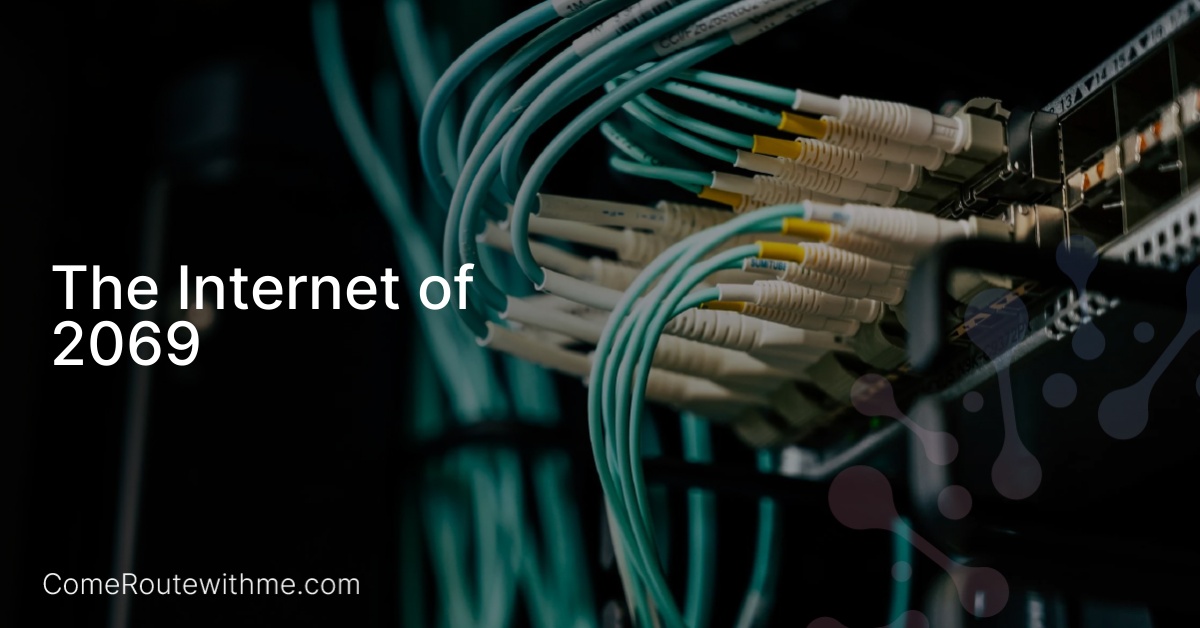
The internet of 2069 will probably still consist of a web of fiber optic networks, but it will also likely be complemented by satellite-based networks and ultra-broadband wireless coverage. A cloud of automated server farms will probably consume enormous amounts of electricity, but there will be a way to power them with low-carbon sources. And, just as today, people will probably connect to the internet using a variety of devices – from virtual and augmented-reality glasses to neural implants.
What will replace the Internet?
The internet is no longer in its infancy. Dial-up connectivity has given way to broadband connections, and the days of relying solely on wired connections are long gone. Today, many devices connect to the internet via wireless hubs. But what will replace the Internet in the future? How can we ensure that the future of the Internet is as secure and resilient as its present state? Here are some possible answers.
According to the study, ubiquity will result in changes in how people connect, gather information, and consume media. To understand where we’re going, researchers asked 2,558 experts from the Pew Research Center’s Internet Project and other organizations to predict where we’ll be in 2025. These experts were surveyed via major technology-oriented listservs and received their answers online between November 25, 2013 and January 14, 2014.
The metaverse is the next step for the future of the Internet. This new technology will enable users to connect real-life objects and web applications. This new platform will create infinite connections and vast amounts of data. Using this technology, users will be able to access data from their homes and other real-life objects. There are some hints as to how metaverse technology will change our lives. But what exactly will happen?
There are a few key points that could make the Internet safer, faster, and more secure. One of those is the rise of citizen juries. These citizens may use the power of the Internet to make decisions about economics, civic life, and other issues. They could also use citizen juries to apply collective imagination to legislating. This could create new forms of digital property and a new regime of copyright. And it’s likely that people will be more comfortable sharing information with strangers.
Why is Internet important in the future?
The rise of the internet has greatly increased human productivity. The speed with which information is retrieved and disseminated is incredible. Previously tedious tasks like picking up the phone or going outside to the mailbox are no longer necessary. People can now use the Internet for social and emotional purposes, as well as to access information about other people and businesses. However, there are some downsides to the growing power of the Internet.
Universal Internet access may also have a profound effect on future political developments. It would make it possible for anyone to access a vast variety of information. This knowledge can often run counter to current fashions and commercial mass media. It may also lead to greater understanding and cooperation among human civilizations. But how can we make the Internet better? Here are some suggestions. The first thing we should consider is the speed of the Internet.
The speed of information transfer is one of the biggest advantages of the Internet. The world is connected at any time. This means that data transfer and retrieval are no longer limited by physical distance. With the internet, people are able to access information quickly and cheaply. This speed means that businesses can offer a variety of services. One of the main benefits of the Internet is its ability to make the world a smaller and more efficient place.
The growth of the Internet has reshaped our ideas of how the world functions. Our local environment is suddenly global. Information becomes entertainment. We’re not isolated anymore. Instead, we are part of a global community and prefer the virtual one. However, there is a downside to this, and we must take a long-term view of how the Internet will shape our society. It can help people to express themselves in different ways, but we must also consider how it affects the lives of people around the world.
How long will the internet exist?
The answer to the question “How long will the Internet exist?” depends on where you live. In major cities, power supplies will come from redundant substations. However, the Internet’s core routers generally store a day or two’s worth of diesel in case of a power outage. This amount is sufficient to truck more diesel into the datacenter and keep the system running. But what if all power stations are unavailable? What will happen to the Internet?
The internet is crucial to all industries. Hospitals, law enforcement, and government use it heavily. Every corporation and the entire spectrum of human institutions relies on its availability and stability. But, is it a necessity? Does it matter? If it does, is it possible that the system will be gone soon enough to restore the lost productivity? We don’t know for sure, but it’s definitely not a desirable scenario.
Despite its widespread use, the Internet is not immune to a nuclear attack. To maintain an internet connection, routers need a path from where they receive data. If that path is destroyed, internet access would cease for everyone on the network. The Internet’s origins go back to the Cold War. The Defense Department originally designed the Internet as a means of sharing computing resources among users. However, the Internet’s idea of sharing resources could also be applied to military command and control situations.
The Internet was born from a large idea – the ability to chop messages and send them through the network in several transmissions. However, this was only a temporary solution. As more people and data use the Internet, it slows down even more. One proposed remedy for the Internet’s problems is to create a toll road on the Information Superhighway. That way, people who want their important messages to get through would pay a higher price. The Internet’s popularity is democratic, but that doesn’t mean it’s free.
What is Internet today?
Historically, the internet was not even around 40 years ago. The first words were typed onto the internet on 29 October 1969, but the real birth date of the Internet is January 1, 1983. The Internet was not around then because computer networks had no standardized way to communicate. The birth of the Internet coincided with the development of a new communication protocol. Today, the Internet is a worldwide network of electronic devices. To destroy the Internet, one must destroy all computer networks and all electronic devices on the planet.
The Internet has changed many aspects of life. Most traditional forms of communication have been redefined or bypassed by the Internet, creating new services like online music and digital newspapers and news aggregators. Users can now choose what information they want to receive, when they want it, and how they want to receive it. With so much information available on the Internet, we no longer have to suffer through scattergun mass communication. Today, we can choose exactly what we want to read and receive.
Despite its recent evolution, the Internet is a complex network of computer networks. Its system architecture is a network of computers, servers, routers, and switches. Like a home network, it enables computers to communicate with each other. The Internet consists of millions of computers, each of which is connected to the others via networks. Hence, the term “internet” is still relevant. When discussing the Internet, we can’t avoid the question “What is the Internet?”
The Internet is comprised of hundreds of thousands of miles of cables. 99% of the Internet is carried through an optic fiber cable. This cable is also known as a submarine cable, which connects all towers around the world. When a person accesses the Internet, he or she goes through various companies that connect the different countries on the Internet. One company is currently laying the entire Purdunia cable, which stretches across the ocean.
How the Internet will change in the future?
We’ve been connected to the Internet through a variety of methods, such as dial-up connections, but in the future, we’ll have a permanent and automatic connection. Instead of taking several minutes to dial up to the internet, we’ll simply enter a Wi-Fi password and be connected. Rather than relying on a wired connection, many devices will connect to the Internet via wireless hubs.
The internet will enable more people in developing countries to become aware of disparities and the costs of manipulating governments. As users grow more educated, peaceful changes will occur. Public uprisings will increase as internet use becomes more widespread. Moreover, “nations” of shared interests will become more difficult to control. Formal governments will attempt to regulate and control these “nations,” but the Internet will be more fragmented than ever before.
The internet’s evolution will be interconnected with the rise of mobile computing. Mobile devices will have internet capabilities, and network coverage will be greater than ever. The majority of devices will be connected via wireless networks. The physical connections between machines that form the backbone of the Internet will be super-fast and high-capacity. By 2069, everyone will have access to the Internet. While the future of the Internet remains uncertain, some trends suggest that we’ll have a ubiquitous internet by then.
Social media platforms have become indispensable for many people. With ubiquitous connectivity, people can connect with one another, gather information, and consume media in new ways. Thousands of experts have been tapped to provide their insights. We asked them to make predictions on how we’ll be using the Internet in 2025. These experts were identified by prior research and the Internet Project at Pew Research Center. The Internet Project solicited these answers through major technology-oriented listservs. The responses were received online between November 25, 2013 and January 14, 2014.

- Power Management for Networks: Essential Guide for Small Business Infrastructure - September 9, 2025
- Zero Trust Network Architecture for Small Businesses: An Implementation Roadmap - August 26, 2025
- SD-WAN for Small Business: A Complete Guide - August 26, 2025